Slab-Covered Trench Cleaning in Florida
Flotech Environmental provides OSHA-compliant confined-space cleaning, and repair, of slab covered trenches, box culverts, stormwater vaults, and underground drainage vaults for municipalities, utility authorities, general contractors, property managers, and engineering firms throughout Florida. Where sediment accumulation, debris loading, and structural deterioration reduce hydraulic capacity in large underground stormwater infrastructure, Flotech crews perform man-entry cleaning, dewatering, high-pressure hydro jetting, vacuum extraction, and polyurethane grouting — restoring design capacity without excavation or slab removal. Using high-pressure water jetting at up to 100 GPM and 3,000 PSI paired with high-capacity vacuum extraction, Flotech restores full hydraulic capacity without slab removal, saw-cutting, or excavation.
Flotech’s Non-Destructive Hydrojetting for Trench Drains
Slab-covered trench structures, box culverts, stormwater vaults, and underground drainage vaults are the load-bearing conveyance and storage backbone of Florida's stormwater systems. Unlike pipe-based infrastructure accessed by remote equipment, these structures are large enough for personnel entry and typically covered by concrete slabs, roadway decks, parking surfaces, or other impervious covers that make them inaccessible through conventional cleaning methods.
Box culverts are rectangular reinforced concrete conveyances that function as enclosed channels, ranging from small roadway crossings to large multi-cell structures carrying significant stormwater flow. Slab-covered trench structures operate similarly; they are linear underground channels covered by a concrete deck, often running beneath roadways, parking facilities, or developed parcels. Stormwater vaults and underground drainage vaults serve as collection, detention, or junction structures within the same systems. Outfalls, where these systems discharge to surface waters, are also culvert-type structures subject to the same sediment accumulation and maintenance requirements. When sediment, debris, and organic material accumulate inside them, hydraulic capacity is reduced from the bottom up. Because the structures are underground and covered, the reduction is invisible until it produces a drainage failure (e.g. surface flooding, outfall restriction, or permit exceedance). By this time, emergency response takes the place of general maintenance, and unbudgeted capital expenses are inbound.
Florida CS/SB 810 (effective July 1, 2025) requires MS4 entities (municipalities, counties, community development districts, and similar public bodies) to conduct annual operation and maintenance inspections of all permitted stormwater management systems and identify infrastructure with significant vulnerability to obstruction, blockage, deterioration, or failure that would result in flooding and property damage. Completed inspection checklists must be submitted to FDEP and the Division of Emergency Management by September 1, 2026, and annually by June 1, each year after. FDEP's Environmental Resource Permit framework sets inspection frequency for underground vault and chamber structures at once per year. Operators of large and medium MS4 systems are separately required to maintain NPDES permit compliance, including documented inspection and maintenance programs under Fla. Admin. Code R. 62-624.400 and 40 C.F.R. 122.26.
Florida's rainfall pattern (40 to 60 inches annually, with approximately two-thirds falling between June and October) drives accelerated sediment loading in these structures. High-velocity storm flows carry sand, organics, and fine particulates into underground conveyances where they settle and compact during low-flow periods. Structures that receive no routine maintenance accumulate years of material that high-pressure jetting alone cannot fully dislodge without personnel entry.
Confined Space Entry for Trench Cleaning
Slab-covered trench structures, box culverts, and stormwater vaults meet the OSHA definition of permit-required confined spaces under 29 CFR 1910.146(b): they are large enough for personnel entry, have limited means of ingress and egress, and contain recognized safety hazards including hazardous atmosphere potential, engulfment risk from stored water or flowing material, and structural entrapment risk from converging geometry.
Flotech crews are trained and certified for permit-required confined space entry. Entry operations include atmospheric testing for oxygen deficiency, hydrogen sulfide, combustible gases, and other hazards prior to and continuously during work. Full-body harness, tripod and non-entry rescue equipment, confined space ventilation, H2S monitors, LEL metering, and self-contained breathing apparatus are deployed on every confined-space job. Flotech's over 100 crew members include confined-space, OSHA 10, and OSHA 30 certified operators. Confined-space cleaning operations are conducted under a written permit program in compliance with 29 CFR 1910.146.
Dewatering
Underground stormwater structures frequently contain standing water or active flow at the time of cleaning, particularly following rain events or in systems with high water table influence. Flotech performs dewatering prior to man-entry cleaning using a pump fleet anchored by 6-inch Gorman-Rupp, Godwin, and Multiquip units sized for the volumes and head conditions common in Florida stormwater infrastructure.
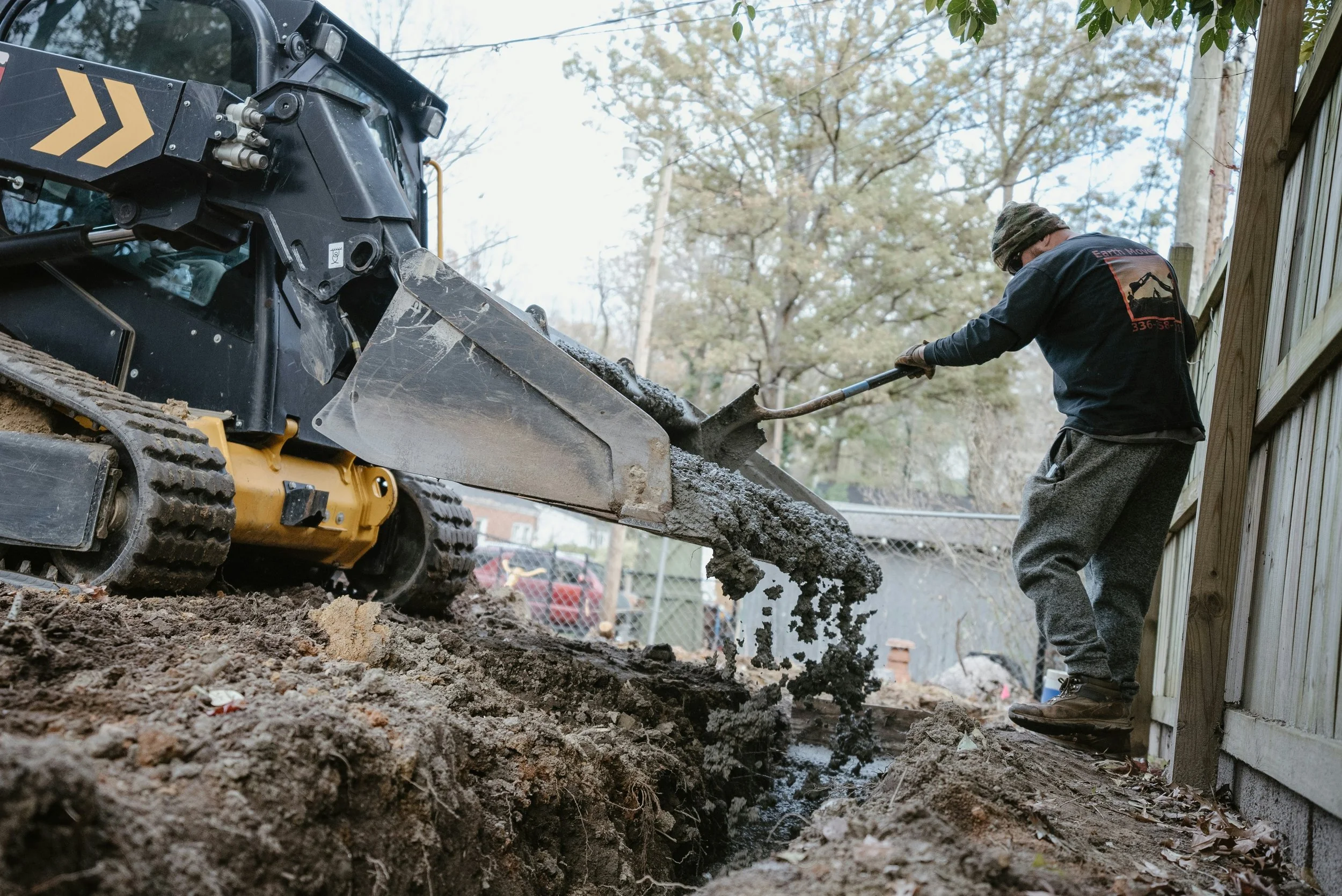
Dewatering is managed in combination with flow isolation. Flotech crews may need to construct sandbag berms and earthen berms at upstream and downstream access points to isolate the work section, divert active flow around the cleaning zone, and maintain dry or controlled-wet conditions during personnel entry. Where full dewatering is not achievable prior to cleaning, Flotech crews perform underwater cleaning operations using appropriately configured equipment and PPE for submerged or partially submerged conditions.
The Flotech Advantage
Proven Experience: Over 12 million linear feet of pipeline and drainage infrastructure cleaned and inspected across Florida for commercial property managers, industrial facilities, municipal utilities, and FDOT projects
Confined-Space Capability: OSHA 10 and OSHA 30 certified crews, permit-required confined space entry protocols, full atmospheric monitoring, and a dewatering fleet sized for Florida stormwater infrastructure
Integrated Service: Dewatering, man-entry cleaning, hydrojetting, vacuum extraction, manual cleaning, polyurethane grouting, and CCTV inspection self-performed by Flotech without subcontracting
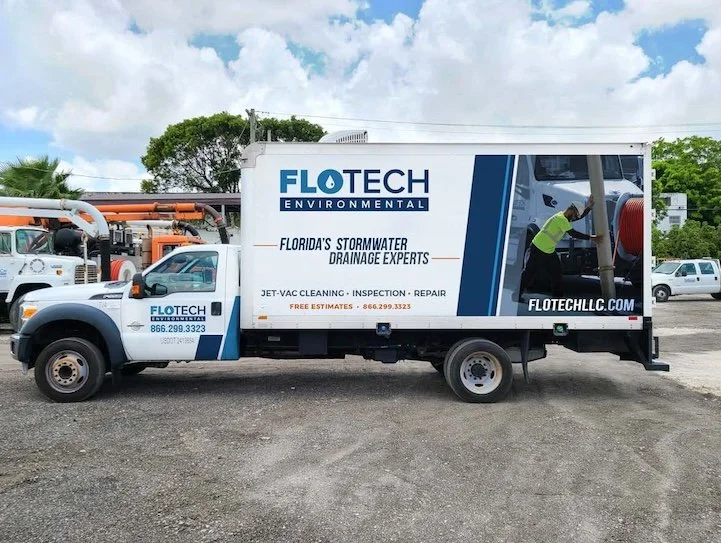
Specialized Equipment: High-pressure water jetting at up to 100 GPM and 3,000 PSI paired with high-capacity vacuum trucks, configured with nozzle and hose packages sized for confined access through trench drain grates, cleanouts, and outlet structures
Non-Destructive Cleaning: Cleaning performed through existing trench drain access points without slab removal, saw-cutting, or excavation of surrounding surfaces
Statewide Coverage: Regional offices in Miami, Fort Lauderdale, Orlando, and Tampa enable rapid deployment and continuous service across Florida
Our Slab Covered Trench Cleaning Services
Hydrojetting for Trench Drains
Flotech performs high-pressure water jetting to clear blockages and restore design flow in trench drains, slot drains, and covered drainage channels. Our crews deploy variable-pressure nozzles and reduced-diameter hose packages to navigate trench drain access points, break up compacted sediment, FOG, scale, and root intrusion, and re-establish full hydraulic capacity through the channel and downstream outlet. Service is performed throughout Tampa, Miami, Fort Lauderdale, and Orlando, with crews dispatched from regional offices in each market.
Vacuum Excavation and Debris Removal
As jetting dislodges blockages, Flotech's vacuum trucks simultaneously remove sediment, organic debris, and rinse water from the trench, leaving the system clean and immediately returned to service. The combined jet-and-vacuum process eliminates the need for slab removal, saw-cutting, or excavation, and contains all removed material in the truck for legal disposal — preventing washdown to adjacent surfaces, parking areas, or storm inlets.
Covered Pipe and Structure Cleaning
Beyond trench drains, Flotech cleans pipes, catch basins, and drainage structures located beneath concrete slabs, driveways, loading docks, parking decks, and other covered surfaces. Common applications include warehouse floor drains, industrial process trenches, food service grease interceptors, parking deck collection systems, and municipal right-of-way drainage cleaned through cleanouts, vault hatches, or grate access. Work is performed for industrial facilities, commercial property owners, HOAs, and municipal agencies throughout Florida.
CCTV Inspection of Covered Drainage Systems
Following cleaning, Flotech performs CCTV inspection of trench drains, drainage piping, and connected structures to verify cleaning quality, document remaining defects, locate damaged sections or settled joints, and generate condition reports for facility asset management, capital planning, and stormwater permit compliance. Inspection data is delivered in standard reporting formats compatible with WinCan, Granite, POSM, and GIS-based facility management platforms.
Polyurethane Grouting
Following cleaning, Flotech self-performs polyurethane grouting to seal active infiltration at joints, cracks, and construction seams in box culverts, slab-covered trench structures, and stormwater vaults. Groundwater infiltration through structural joints is a primary cause of root migration, void formation beneath slabs, and progressive joint deterioration in underground concrete structures. Left unaddressed after cleaning, active infiltration reintroduces sediment loading and accelerates the return of the conditions that prompted cleaning.
Polyurethane grout is injected at pressure into joints and cracks, expanding on contact with water to form a flexible, water-tight seal. The material is chemically compatible with concrete, tolerant of ongoing moisture, and capable of sealing actively flowing infiltration - making it well suited for the groundwater conditions common in Florida's high water table environments. Work is performed in conformance with applicable ASTM standards for structural and infiltration grouting.
CCTV Inspection of Covered Drainage Systems
Following cleaning, Flotech performs CCTV inspection of trench drains, drainage piping, and connected structures to verify cleaning quality, document remaining defects, locate damaged sections or settled joints, and generate condition reports for facility asset management, capital planning, and stormwater permit compliance. Inspection data is delivered in standard reporting formats compatible with WinCan, Granite, POSM, and GIS-based facility management platforms.
Benefits of Slab Covered Trench Cleaning
Restores design hydraulic capacity through trench drains, outlet structures, and downstream piping without slab removal, saw-cutting, or excavation
Extends the service life of trench drain frames, grates, and channel walls by removing the abrasive sediment and corrosive organic deposits that accelerate wear
Reduces emergency response costs and unplanned downtime through scheduled preventive maintenance rather than reactive blockage clearing
Maintains compliance with NPDES industrial stormwater permits, FDEP requirements, and facility operating standards governing on-site drainage performance

Areas We Serve
Flotech Environmental provides slab-covered trench cleaning and hydrojetting for trench drains throughout Central Florida, with regional offices in Miami, Fort Lauderdale, Orlando, and Tampa Bay. We serve municipalities, contractors, property managers, HOAs, and engineering firms across the state.
Frequently Asked Questions About Slab Covered Trench Cleaning
-
Over time, trench drains beneath slabs accumulate sediment, grease, and debris that reduce drainage capacity and can cause localized flooding or structural damage. Standard cleaning equipment cannot reach covered systems, so specialized jetting and vacuum trucks are required for effective trench cleaning.
-
Slab-covered trench cleaning is needed in commercial and industrial facilities, parking structures, loading docks, warehouses, municipal properties, and any property with drainage systems or trench drains running beneath concrete or pavement in Florida.
-
Yes. We can perform CCTV inspection of covered trench lines and drainage pipes after cleaning to document conditions, identify defects, and provide reporting for asset management and compliance purposes.
-
Cleaning frequency depends on the volume of traffic, stormwater runoff, and debris the system receives. Most commercial and industrial properties benefit from annual or semi-annual trench cleaning to maintain flow capacity and prevent blockages.