
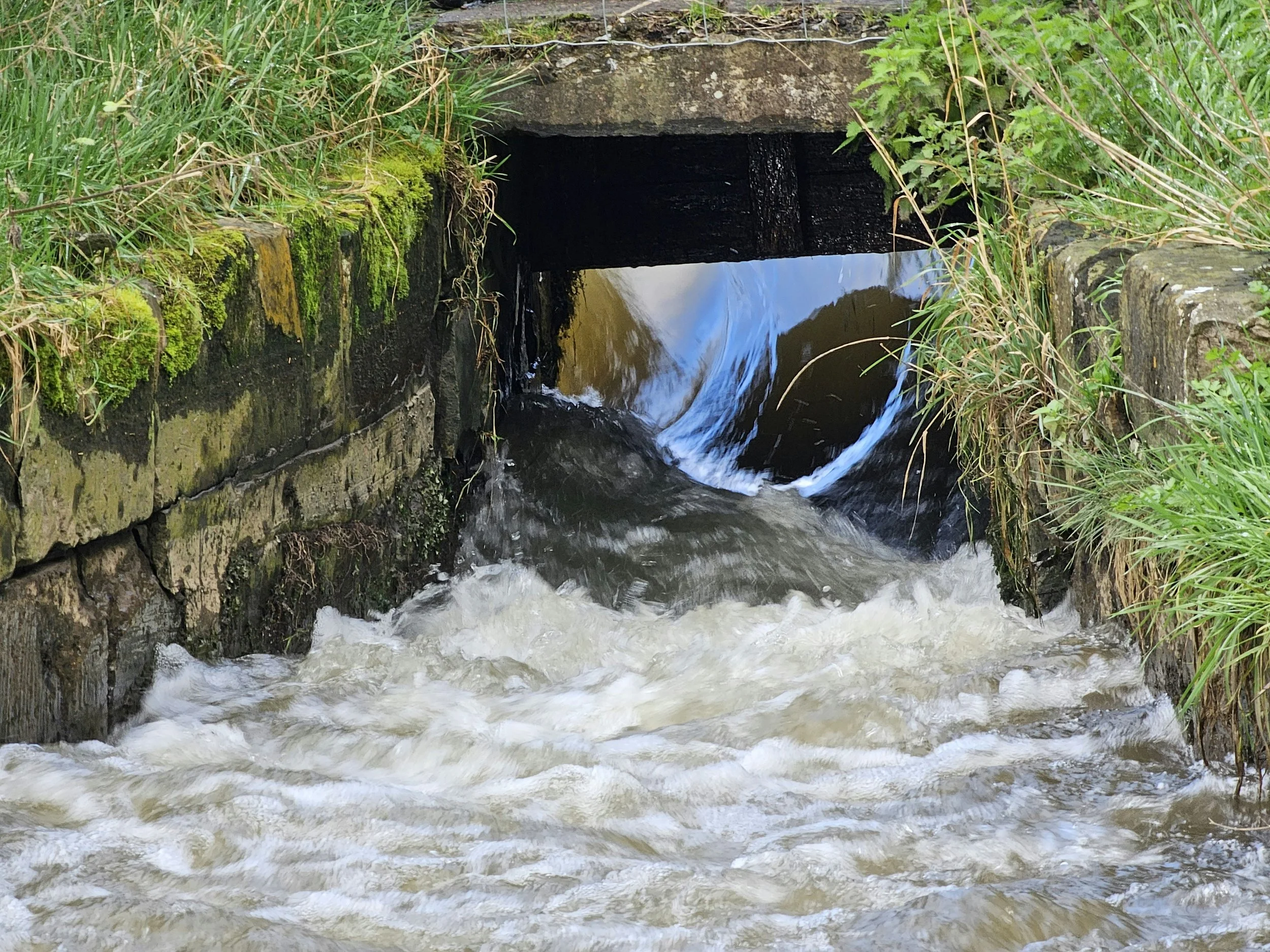
Culvert Cleaning, Desilting & Repairs
A culvert is a pipe or enclosed structure that carries stormwater under a road, driveway, or embankment, connecting the drainage on one side to the other. When a culvert backs up with sediment and debris, water that cannot pass through the pipe goes over or around the road instead, flooding the area upstream and eroding the embankment and pavement above.
Flotech Environmental provides culvert cleaning, desilting, and trenchless culvert repair for municipalities, contractors, and property managers across Florida. Our fleet of over 30 combination jet vac trucks delivers up to 4,000 PSI of water pressure and 5,000 CFM of vacuum, removing sediment, debris, and vegetation from culverts and storm pipes from 6 inches through 96 inches in diameter. Routine culvert cleaning and desilting helps restore stormwater system capacity to the originally permitted design conditions, which matters under Florida's Environmental Resource Permitting program (Rule 62-330, F.A.C.). Operation and maintenance are conditions of the permit, and because HOAs and property managers fall outside the MS4 framework, the obligation lands on them directly, including a written O&M plan and periodic inspections confirming the system "continues to function as designed and permitted" (DEP ERP Applicant's Handbook, 2024). Flotech handles this as a single workflow. Our CCTV inspection crews assess pipe condition from the inside, and where inspection identifies structural defects, we repair them without excavation using CIPP or sectional point repairs (ASTM F1216/F2599) and chemical grouting, restoring the pipe from the inside without closing the road.
Why Culvert Maintenance and Repairs Matter
Heavy sediment and debris restrict water flow and cause localized flooding.
Erosion and joint separations can lead to dangerous depressions.
Routine culvert cleaning prevents total system collapses and road washouts.
Structural rehabilitation extends the life of aging assets without the need for excavation.
Clean structures ensure compliance with local water management district standards.
Our Culvert & Structure Services
Culvert Jet-Vac Desilting & Cleaning
Our high-pressure water jetting and jet-vac desilting services remove heavy sediment and restore flow in box culverts and outfalls. We use powerful vacuum technology to safely extract sand, rocks, and organic debris that collect in these structures, returning them to their full design capacity and preventing upstream flooding.
CCTV Culvert Inspection & Condition Assessment
We use NASSCO-certified technicians and robotic cameras to perform detailed internal inspections of drainage structures. This process allows us to identify cracks, joint separations, and root intrusion, providing the data needed to determine if culvert repairs or trenchless rehabilitation are necessary to maintain structural integrity.
Trenchless Culvert Repairs and Grouting
We offer minimally invasive repair solutions to seal leaks and stabilize the soil surrounding damaged culverts. By injecting specialized chemical grouts and installing sectional liners, we stop infiltration and fill external voids without the need for disruptive excavation or road closures.
Emergency Desilting and Blockage Removal
When unexpected storm events or major debris cause immediate drainage failures, we provide rapid response services to clear the obstruction. Our crews are available to perform the urgent culvert cleaning Florida property managers need to mitigate rising water and protect infrastructure from further damage.
Benefits of Culvert Repairs
Restore flow to the original design capacity to prevent flooding
Prevents costly roadway reconstructions and emergency repairs through early intervention
Enhances public safety by eliminating sinkhole risks and washouts
Protects local water quality by removing accumulated pollutants, trash, and sediment
Minimizes community disruption by using trenchless culvert repairs instead of open-cut excavation
How do Property Managers and HOAs Benefit from Culvert Maintenance?
Culverts carry stormwater under the roads, driveways, and entrances a community depends on, and in most Florida communities they are private infrastructure owned by the association. Florida averages 40 to 60 inches of rainfall a year, and a sediment-loaded culvert performs like an undersized one. FEMA identifies deferred maintenance as a reason stormwater structures fail during severe storms, and culvert failures are the expensive kind: washouts, pavement collapse, and a blocked entrance when residents and emergency vehicles need it open. Routine culvert cleaning and desilting prevents that failure and keeps the system at the capacity it was permitted with, and for an association, documented maintenance is also proof the system is being kept up as the permit requires.
Frequently Asked Questions About Structure & Culvert Repair
-
For commercial developments and industrial sites, the property owner or the homeowners’ association (HOA) is generally responsible for the upkeep of all internal drainage structures. This includes the culverts under site entrances and those connecting on-site retention ponds. We partner with commercial property managers to perform professional jet-vac cleaning and repairs.
-
Compared to cohesive soils, Florida’s sandy material is prone to rapid erosion, potentially undermining culvert support. You should look for depressions or "soft spots" in the asphalt or landscaping directly above the pipe, sediment being expelled from the culvert outlet during dry weather, or concrete mitered ends that appear to be sinking or pulling away from the roadway. If you notice a whirlpool forming over the pipe during a rain event, it often indicates a structural breach that is sucking soil into the system.
-
We recommend a full system cleaning every year, ideally performed during the dry season before June. However, for structures in high-traffic commercial areas or those near active construction sites, quarterly or biannual desilting is often necessary. Removing accumulated heavy sand and organic debris before hurricane season ensures your system has the maximum hydraulic capacity needed to handle the intense surge of a tropical storm.