
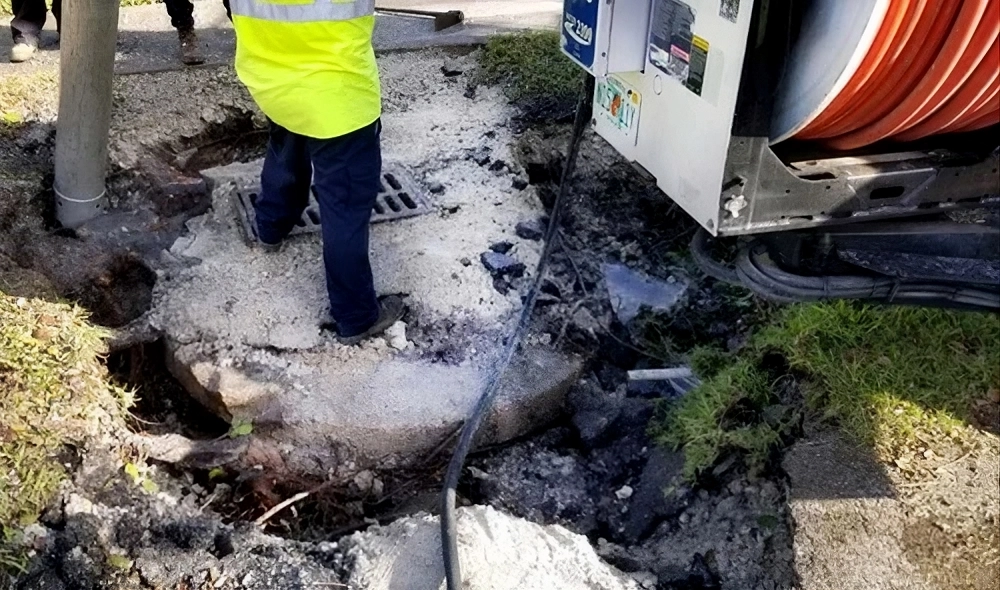
A sinkhole usually gives warning signs before the ground opens up: new depressions in the yard or road, cracks in pavement or walls, doors and windows that suddenly stick, and water that pools or drains away in odd places. If you see these signs in Florida, keep people and vehicles away from the area and call a qualified contractor to assess it.
Florida sits on limestone that slowly dissolves in groundwater. Sand and clay above it can wash down into the gaps, and a void forms below the surface. Broken sewer and storm pipes make this worse because leaking water carries soil away. This guide explains the warning signs, the two main sinkhole types in Florida and what to do next.
Warning signs of a sinkhole
- A round or oval depression in a lawn, parking lot or road
- New cracks in pavement, driveways, slabs or block walls
- Doors and windows that stick or no longer latch
- Fence posts, utility poles or trees that start to lean
- Ponding water in a new spot, or a pond that drains quickly
- Exposed tree roots or foundations where soil has dropped away
- Sudden drops in water levels in nearby wells
One sign alone does not prove a sinkhole. Settling backfill, a leaking pipe or poor drainage can look similar. That is why an inspection matters before any repair.
The two main sinkhole types in Florida
Cover-subsidence sinkholes form slowly where sandy soil covers the limestone. Sand trickles into the voids and the land surface sags over weeks or months. They are common across much of the state and are usually small.
Cover-collapse sinkholes form where a layer of clay bridges a cavity. The clay holds until it can no longer support the weight, then it collapses, sometimes within hours. These are the dramatic events that make the news, and they can affect roads, utilities and buildings.
How broken pipes cause and hide sinkholes
Many voids under Florida streets start with a cracked storm pipe, an open joint or a failed manhole. Each storm washes a little more sand into the pipe until a cavity forms under the pavement. A CCTV pipe inspection can show where soil is entering the line, so the pipe can be repaired before the road above it fails.
What to do if you suspect a sinkhole
- Keep people, pets and vehicles away from the area.
- If it is near a building, a road or utilities, call 911 or your local public works department.
- Photograph the area and note when you first saw the change.
- Contact your insurer if a structure may be affected.
- Have the site and nearby pipes assessed before any repair.
How sinkholes are stabilized
Repair depends on the cause and the size of the void. Common methods include compaction grouting to densify loose soil, pressure grouting to fill voids and seal leaking pipe joints, and lining or point repair of the damaged pipe so soil stops washing in. Flotech provides sinkhole stabilization and repair for Florida municipalities, contractors and property managers, including 24/7 emergency response.
Frequently asked questions
What are the first signs of a sinkhole?
The first signs are often a small depression in the ground, new cracks in pavement or walls, and doors or windows that start to stick. Water that pools in a new place or drains away quickly can also be an early sign.
Are sinkholes common in Florida?
Yes. Much of Florida sits on limestone that dissolves over time, so sinkholes are more common there than in most states. Most are small cover-subsidence sinkholes, but cover-collapse sinkholes can open suddenly.
Can a broken sewer or storm pipe cause a sinkhole?
Yes. A cracked or open-jointed pipe lets soil wash into the line every time water flows. Over time this leaves a void under the surface that can collapse. Inspecting and repairing the pipe stops the soil loss.
Who do I call about a sinkhole on public property?
Call your city or county public works department, or 911 if it threatens a road, utility or building. Municipalities often bring in a specialist contractor to inspect the pipes and stabilize the ground.
Seeing signs of ground movement on a Florida site? Contact Flotech to request an assessment, or call (866) 299-3323 for emergency response.