
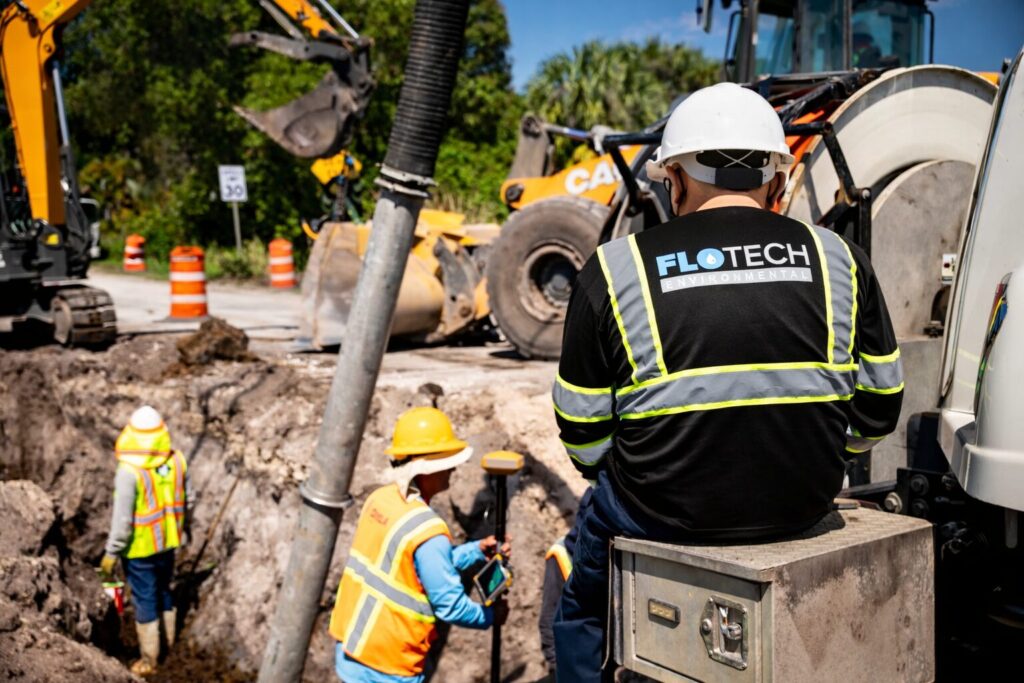
Hydro excavation and vacuum excavation are often used as if they mean the same thing. They are closely related, but they are not identical, and choosing the right one affects cost, speed and safety on a Florida job site. This guide explains how each method works, where air excavation fits in, and how to decide which one your project needs.
What vacuum excavation means
Vacuum excavation is the umbrella term for any digging method that loosens soil without a backhoe or auger and then removes it with a powerful vacuum. The truck carries a large debris tank, a high-flow vacuum system and either a water or an air system to break up the ground. Because nothing mechanical touches the buried line, vacuum excavation is known as non-destructive digging.
What hydro excavation means
Hydro excavation, often called hydrovac or hydro digging, is vacuum excavation that uses pressurized water to cut the soil. The water turns soil into slurry, and the vacuum lifts the slurry into the tank. Water cuts quickly through most ground conditions, including the sandy soils, clay and compacted fill common in Florida.
Where air excavation fits
Air excavation uses compressed air instead of water to break up the soil, followed by the same vacuum recovery. It is slower in dense ground, but the spoil stays dry and can often be used to backfill the hole. It is a good choice around sensitive electrical equipment, or where there is nowhere to dispose of wet slurry.
Side-by-side comparison
- Speed: hydro excavation is usually the fastest in most soils; air excavation is slower in clay or compacted material.
- Spoil: hydro creates slurry that must be hauled and disposed of; air leaves dry spoil that can be reused.
- Ground conditions: water handles a wide range of soils and works where the ground is hard; air works best in loose or sandy ground.
- Utilities: both protect gas lines, fiber optic cable, water mains and electrical lines far better than mechanical digging.
- Site restoration: both leave a small, clean hole, so roads, lawns and sidewalks need very little repair.
Common uses in Florida
- Potholing and daylighting to confirm the depth and location of buried utilities before directional drilling or construction.
- Slot trenching for new conduit, pipe or cable.
- Digging holes for utility pole setting without damaging nearby lines.
- Exposing water, sewer and storm lines for repair or tie-ins.
- Emergency excavation after a line break or utility strike.
Why it matters: Sunshine 811 and the tolerance zone
Florida law requires excavators to notify Sunshine 811 before digging. Locators mark the approximate position of each utility, but the true line can sit anywhere within a tolerance zone of up to 24 inches on either side of the mark. Digging inside that zone with a backhoe is where most utility strikes happen. Vacuum and hydro excavation let crews expose the line safely and confirm exactly where it is.
How to choose the right method
- Choose hydro excavation when speed matters, the ground is hard or mixed, and slurry disposal is available.
- Choose air excavation when you want dry, reusable spoil or are working around sensitive electrical equipment.
- Choose either one over mechanical digging any time you are inside the tolerance zone of a marked utility.
Many Flotech Environmental trucks can switch between water and air on the same job, so the crew can match the method to the ground as conditions change.
Frequently asked questions
Is hydro excavation the same as vacuum excavation?
Hydro excavation is a type of vacuum excavation. All hydro excavation uses a vacuum, but vacuum excavation can also use compressed air instead of water.
Is hydro excavation safe around gas lines?
Yes. Controlled water pressure and vacuum suction expose gas lines without the impact of a bucket or auger, which is why utilities and contractors use it inside the tolerance zone.
What happens to the slurry?
The slurry is held in the truck’s sealed debris tank and taken to an approved disposal facility, so nothing is left on site.
Talk to a Florida hydro excavation contractor
Flotech Environmental provides hydro excavation and vacuum excavation across Florida for municipalities, utilities, engineers and contractors. Contact our team to plan your next dig or request emergency support.